

Neha Duggal


Latest research and insights

Nobody built MCP servers to hold identity. They do anyway.
By Neha Duggal
The identity plane your agents run on is whatever the last MCP server someone installed decided it should be. That is not the layer to leave to chance.

Agents are redefining sensitive access and P0 is leveraging AI to extend coverage just as fast
By Neha Duggal
P0 now supports connectors for Salesforce, Cloudflare, Grafana Cloud and Datadog, extending Zero Standing Privilege controls for users and agents beyond cloud infrastructure into broader workforce application coverage.

When your Snowflake AI agent can query everything you can query
By Neha Duggal
Snowflake Cortex is a powerful addition to the modern data platform, and the use cases are real. But every Cortex Agent deployment is also an identity governance event. The agent does not audit itself. It queries what it can query, surfaces what it can surface, and connects to what it is given access to.

The identity risks of vibe coding
By Neha Duggal
Vibe coding changes the relationship between a developer and the code they ship. It does not change the fact that code carries identity and access decisions, and that those decisions have consequences.

Claude didn’t go rogue. Permissions did.
By Neha Duggal
The PocketOS incident is being told as a story about a coding agent that went off the rails, but that is not the true extent of the tale. It is a story about a long-lived API token with no scoping, no expiry, no approval gate, and no separation between production and backup, sitting where any sufficiently curious actor could find it.

Agentforce and Cortex aren’t SaaS features, they’re agent runtimes
By Neha Duggal
Salesforce Agentforce and Snowflake Cortex have quietly become two of the largest agentic deployment platforms in the enterprise.
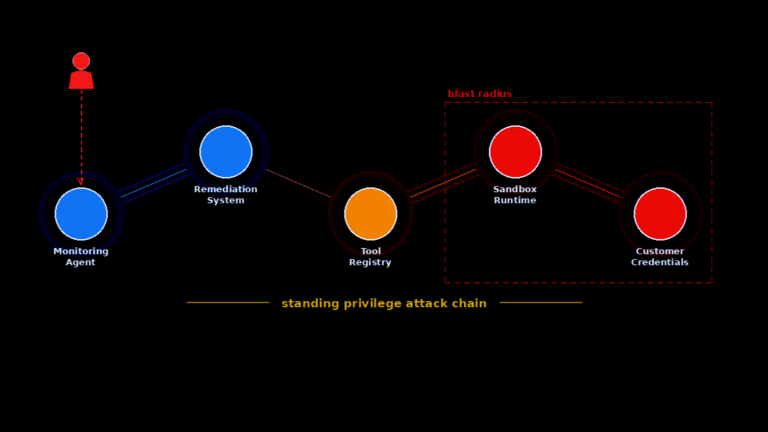
The Composio breach: Let’s stop blaming the agents
By Neha Duggal
The Composio breach was not only about agentic AI, leaked credentials or sandbox execution. It was about trusted internal systems with enough standing privilege to become an attack path.
Start Governing NHIs by Managing Access, Not Credentials
By Neha Duggal
In Part 3 of our Non-Human Identity (NHI) Governance series, Kelsey Brazill breaks down why vaulting isn’t enough, what true governance looks like, and how to move from static credentials to ephemeral, just-in-time access.
Close the NHI Governance Gap
By Neha Duggal
In Part 4 of our Non-Human Identity (NHI) Governance series, Kelsey Brazill explains why this blind spot persists, and what good governance really looks like when extended to machines.
Self Assessment: Modern Access Management Maturity
By Neha Duggal
To wrap up our five-part series on Non-Human Identity (NHI) Governance, we’re sharing a practical self-assessment framework to help teams pinpoint where they stand on the Modern Access Management Maturity Curve.

More than visibility: P0 introduces privileged access control for agents
By Neha Duggal
AI agents are increasingly playing a part in how modern developer teams build, automate, and scale.
Governing Access in Amazon Bedrock
By Neha Duggal
Generative AI has fully entered the enterprise mainstream and platforms like Amazon Bedrock allow organisations to build and scale AI use cases with Foundational Models