

Blog

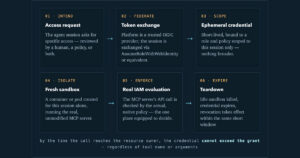
Nobody built MCP servers to hold identity. They do anyway.
The identity plane your agents run on is whatever the last MCP server someone installed decided it should be. That is not the layer to leave to chance.
No results found.

5 mins
The identity plane your agents run on is whatever the last MCP server someone installed ...
6 mins
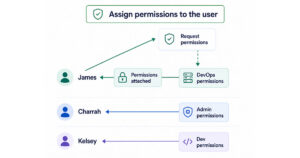
"Just in Time (JIT) access" is a simple concept but can be architected in multiple ways with ...

4 mins
P0 now supports connectors for Salesforce, Cloudflare, Grafana Cloud and Datadog, extending ...

4 mins
Snowflake Cortex is a powerful addition to the modern data platform, and the use cases are ...
7 min
Tool-level filtering alone is not access control.

6 mins
Vibe coding changes the relationship between a developer and the code they ship. It does not ...

5 mins
The PocketOS incident is being told as a story about a coding agent that went off the rails, ...

5 mins
Salesforce Agentforce and Snowflake Cortex have quietly become two of the largest agentic ...
4 mins
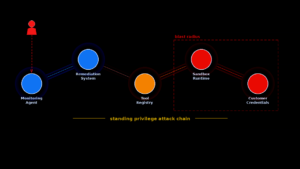
The Composio breach was not only about agentic AI, leaked credentials or sandbox execution. It ...

5 mins
The future of agentic security will not be determined by model quality alone. It will be ...
4 mins
A real-world guide for setting up federated identity using OpenID Conn...

3 mins
Learn why vaults and jump servers can’t keep up, and how an API-led model delivers ...
3 mins
Enterprises upgrade to next-gen PAM for secure, agentless cloud access and compliance

2 mins
We’re honored and thrilled to announce that P0 Security has been named...
3 mins
The Uber breach highlights the unique security challenges posed by clo...
4 mins
Hear from some of the leading voices in cloud security as we explore emerging trends, threats, ...
3 mins
The ServiceNow breach is a wake-up call. As we deploy more autonomous agents with access to ...
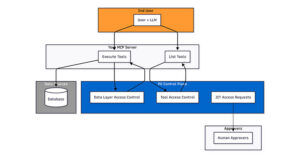
Agentic AI applications — from copilots to infrastructure automation bots — are no longer ...
8 mins
The P0 Runtime Access for AI lets developer and security teams control access for agentic ...
2 mins
To strengthen access governance for both human and non-human identitie...
6 mins
In Part 3 of our Non-Human Identity (NHI) Governance series, Kelsey Brazill breaks down why ...
2 mins
To wrap up our five-part series on Non-Human Identity (NHI) Governance, we’re sharing a ...
3 mins
P0 Security has secured $15 million in Series A funding, totaling $20 ...
3 mins
Securing all identities is key: insights on scalable governance from Paychex’s CISO.

4 mins
P0's integration with Google Cloud projects allow security engineers t...

2 mins
Announcing P0’s general availability! P0 is the first unified offering...
3 mins
OAuth scopes solve an important part of the authorization puzzle: delegated capability. But ...

3 mins
Discover the key differences between Non-Human Identities (NHIs) and machine identities. Learn ...

5 mins
AI agents are increasingly playing a part in how modern developer teams build, automate, and scale.

4 mins
Granting temporary access in Google Cloud with conditional IAM improve...
2 mins
Generative AI has fully entered the enterprise mainstream and platforms like Amazon Bedrock ...
4 mins
This blog post explores the concept of granting temporary access to an...
3 mins
Divvy Homes migrates from a cumbersome legacy PAM solution, gaining co...
3 mins
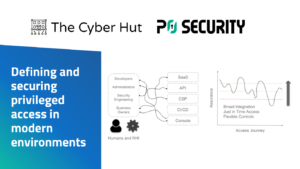
Today’s privileged access challenges demand a shift from static, siloed controls to ...
5 mins
In Part 2 of our Non-Human Identity (NHI) Governance series, Kelsey Brazill explores what ...

4 mins
By shifting toward a model of Zero Standing Privileges and implementing just-enough and ...

3 mins
P0 helps cloud security engineers control entitlements for their devel...
3 mins
Google announced that as of January 15, 2024, Policy Intelligence will...
3 mins
I'm excited to kick off a series on rethinking cloud identity for the machine-driven er..
3 mins
In Part 4 of our Non-Human Identity (NHI) Governance series, Kelsey Brazill explains why this ...
8 min
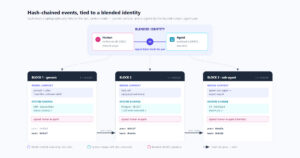
Agent provenance is a useful stress test for whether your agent security stack can actually ...

4 mins
Developers must restrict agent access, mandate human code reviews, and sanitize inputs to ...

4 mins
If you are running agents in evaluation, production, or anywhere in between, do not only ask ...

3 mins
Logging can tell you something happened. But none of that alone determines whether the action ...
3 mins
I see a pattern in early-stage companies that is easy to miss because it looks like maturity. ...

3 mins
Connectivity and authentication have become increasingly commoditized. Most organizations can ...

3 mins
If “governing privileged access” still means vaulting static credentials and shared jump-host ...

5 mins
Azure AI Studio and Azure OpenAI offer transformative capabilities, but their integration into ...

6 mins
Recently, I wrote about the governance challenges and risks associated with Amazon Bedrock and ...

3 mins
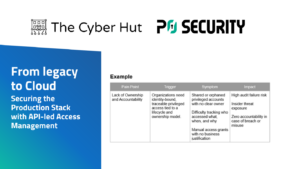
Agentic systems are accelerating everything. They increase the number of access paths, expand ...
6 mins
This is the final of a three-part series taking a look at modern privileged access management ...

4 mins
Broken access control has topped the OWASP Top 10 again — exposing the limits of traditional ...
5 mins
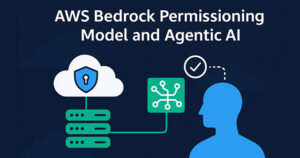
Generative AI enablers like Amazon Bedrock unlock the innovation potential of AI across the ...
5 mins
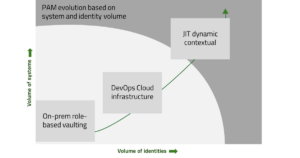
Modern-PAM needs to support more systems, more accounts, a hybrid deployment landscape and ...

3 mins
Learn how security teams can evolve identity programs to manage risk, reduce exposure paths, ...
4 mins
In Part 1 of our Non-Human Identity (NHI) Governance series, Kelsey Brazill exposes the ...

2 mins
Whether you call them machine identities, service accounts, or workload principals, the fact ...

3
How to gain visibility into all human + NHI, securing JIT access, and automating access review ...

5 minutes
A practical field guide to help assess your identity posture across cloud platforms. Built by ...
3 mins
Join P0 at Identity Management Day 2025 to learn best practices for securing all identities.
3 mins
Learn how a leading insurance provider scaled GCP governance, securing 40K+ service accounts ...
4 mins
The p0 approach to just-in-time ephemeral database access streamlines ...
3 mins
To adhere to SOC2 and other certifications, Applied Intuition enforced...
4 mins
Enhancing the security of PostgreSQL cloud databases through the adopt...
3 mins
Transitive access via service accounts is a common security vulnerabil...
3 mins
This blog post provides detailed instructions on investigating service...
2 mins
Afresh faced security and operational challenges with their IAM set up...
4 mins
P0's Kubernetes integration grants temporary access to sensitive resou...

4 mins
P0 automates least-privilege access for customers by integrating with ...
4 mins
P0's integration with AWS allow security engineers to implement least ...
No results found.