

Runtime access control for AI
Control what agents can access and do, with policies that account for the users and machines behind every task.
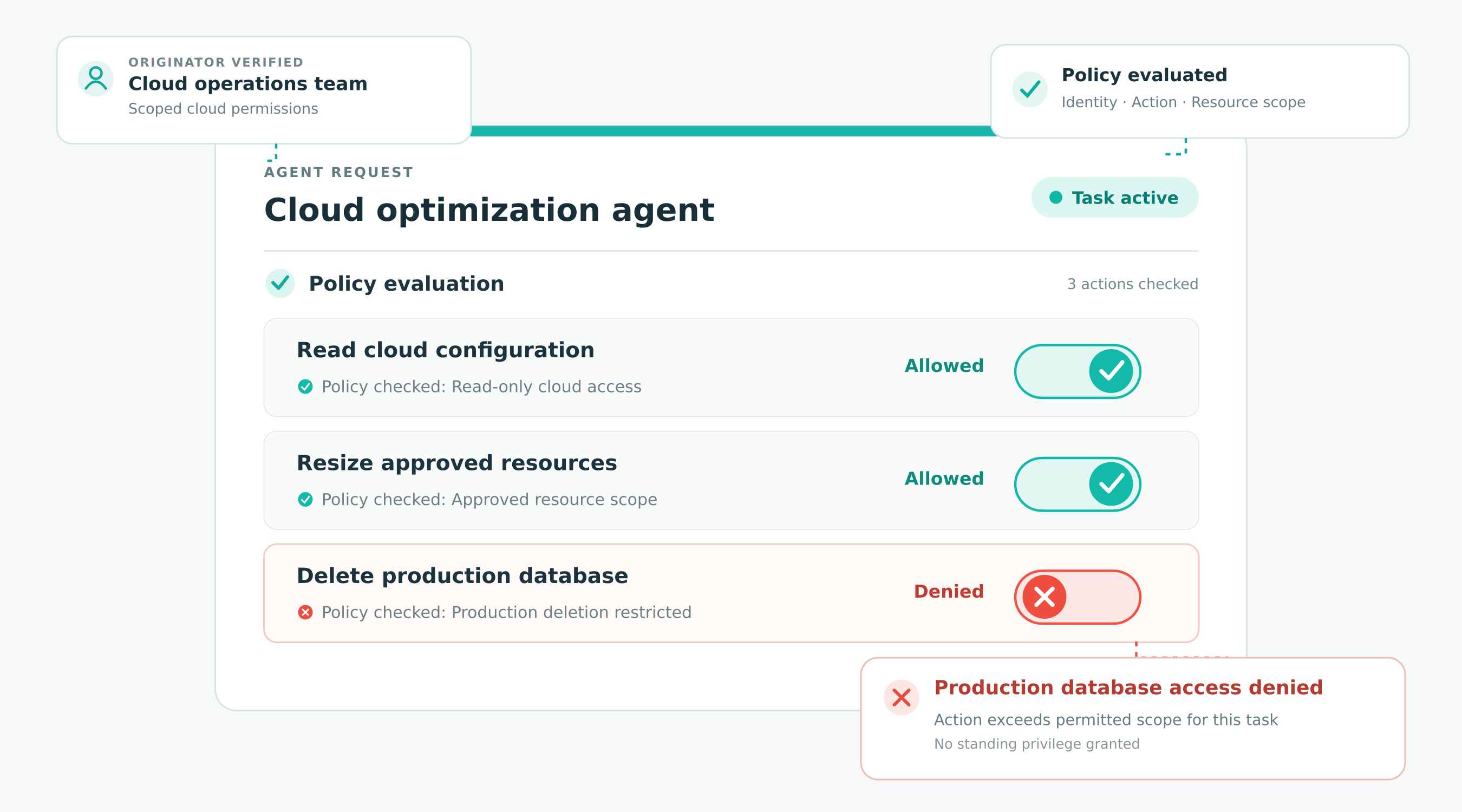
No action without authorization.
Give agents a job. Not the keys to everything.
Too much access was already a problem. Then came AI agents.
Let's be honest. Most organizations still have too much standing privilege, too many credentials and too little visibility into who can do what. Now we're handing those permissions to AI agents that can act autonomously, call other agents and move across systems in seconds.
What could go wrong?

Too much access
Agents inherit permissions and credentials that give them far more access than the job requires.

Not enough control
An agent may be authorized to use a tool, but that doesn't mean every action it takes should be allowed.

No clear accountability
When agents act on behalf of people, machines or other agents, it's not clear how the task was started or who's responsible for the outcome.
An agent can have access. That doesn't mean every action is allowed.
P0 gives you visibility and control over what agents, users and machines can access and do. One platform to discover privilege, enforce access policies and prove what happened.

Know who's behind it
Preserve the originator, agent and their permissions across the workflow.

Check every action
Evaluate what the agent is trying to do before allowing access to resources.

Limit the privilege
Give agents only the permissions required for the task, for only as long as needed.
Access when it's needed. Control always.
P0 brings visibility, access control and accountability together in one platform. From the people and machines behind the work to the AI agents carrying it out, P0 helps you stay in control without slowing anyone down.

Discover the identities and access paths across your environment
Find identities, agents, permissions and risky access paths across your environment. Including the ones nobody told security about.
Control what every agent can do at runtime
Authorize actions based on who's behind the request, what the agent is trying to do and the permissions required. Grant just-in-time privilege, deny unauthorized actions or require human approval.


Prove exactly who did what and why it was allowed
Trace every step in the action chain, including who initiated it, what policies were applied and why each action was allowed or denied. No gaps. No guesswork.
AI agents are new. The privilege problem isn't.
We've spent years helping organizations eliminate standing privilege and give people and machines access only when they need it. Now we're bringing that same approach to AI agents.
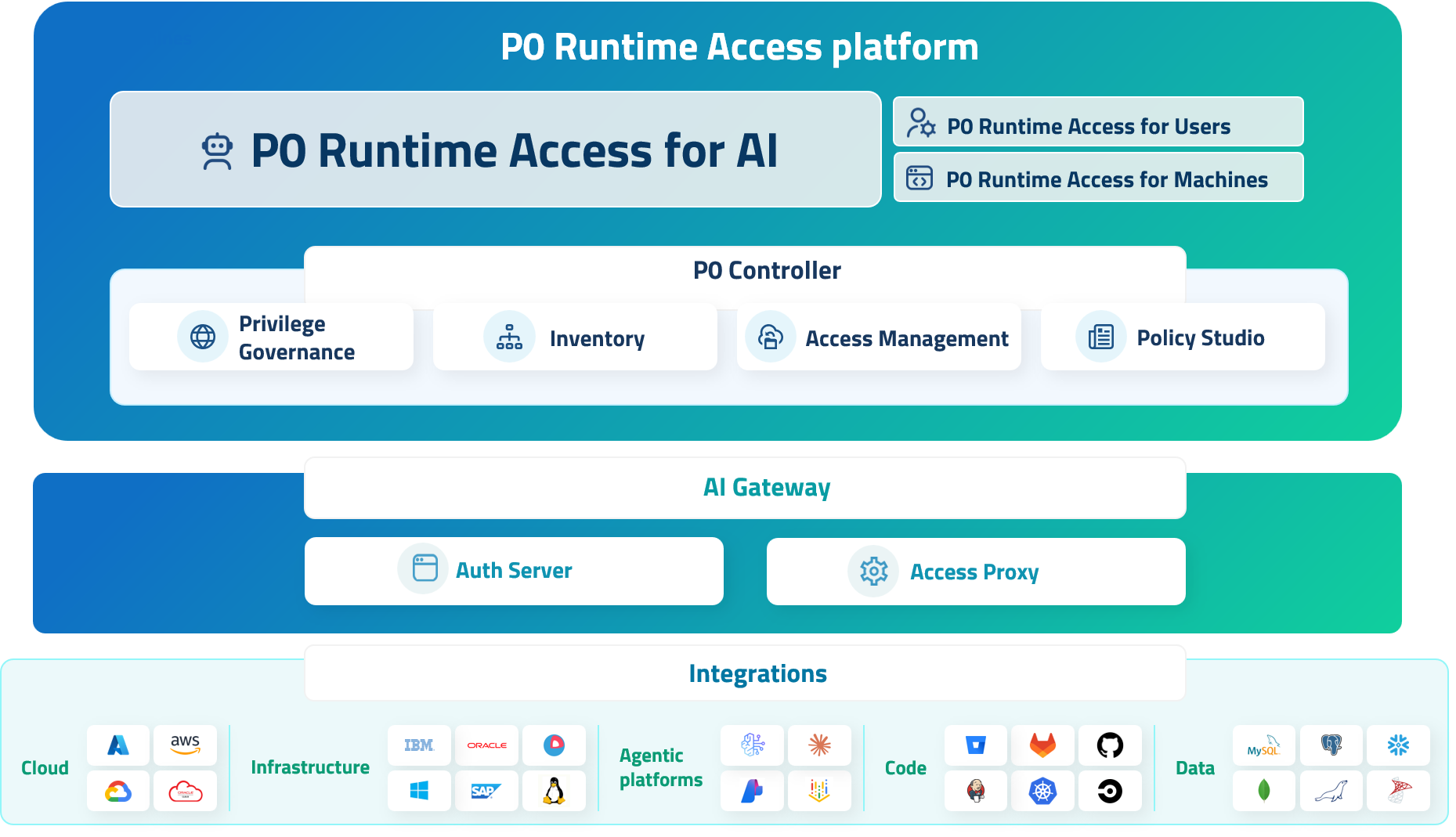
P0 integrates with the identity, infrastructure, collaboration and target systems already in your environment, with SDKs and APIs for extending enforcement into custom applications and workflows. This lets you carry identity context, policy decisions and authorization across the full action chain without replacing your existing identity stack.
See runtime access control for AI in action
Discover every identity, enforce policy at runtime and control access across the full action chain.
Guides, how-tos and best practices.
Everything you need to understand agentic access, runtime authorization and Zero Standing Privilege.