

Platform | Technology
AuthZ Control Plane for AI
Enforce authorization across the full agentic action chain, preserving originator and agent context, applying policy at runtime and controlling access all the way into sensitive systems, tools and data.
A new authorization model for agentic systems
P0’s AuthZ Control Plane for AI is an authorization-native architecture built for agentic systems, where a single task can span multiple identities, agents, tools and target systems.
It connects identity, policy, runtime enforcement and target-system access across the full action chain to solve three requirements traditional access models were not designed for: preserve the identity and provenance behind every action, enforce what an agent can do at runtime and provision task-specific, short-lived access only when it is needed.
Rather than treating authentication, gateway enforcement and downstream privilege as separate controls, P0 brings them into one authorization model that governs the action from originator to outcome.
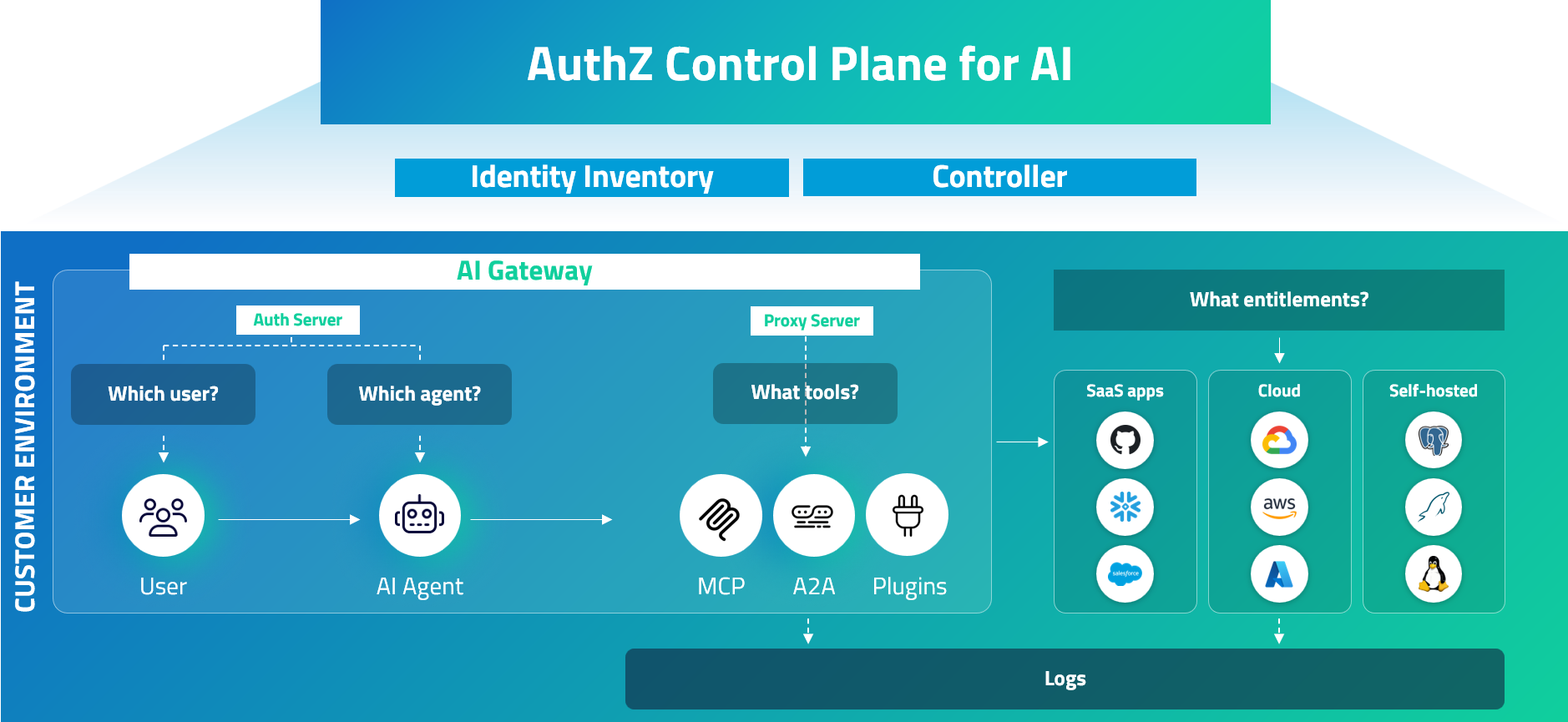
Inside the AuthZ Control Plane for AI
The platform separates centralized identity and policy management from runtime enforcement in the customer environment.
The following components work together to establish identity context, evaluate policy, enforce authorization and control downstream access across the agentic action chain.
One architecture across every originating task
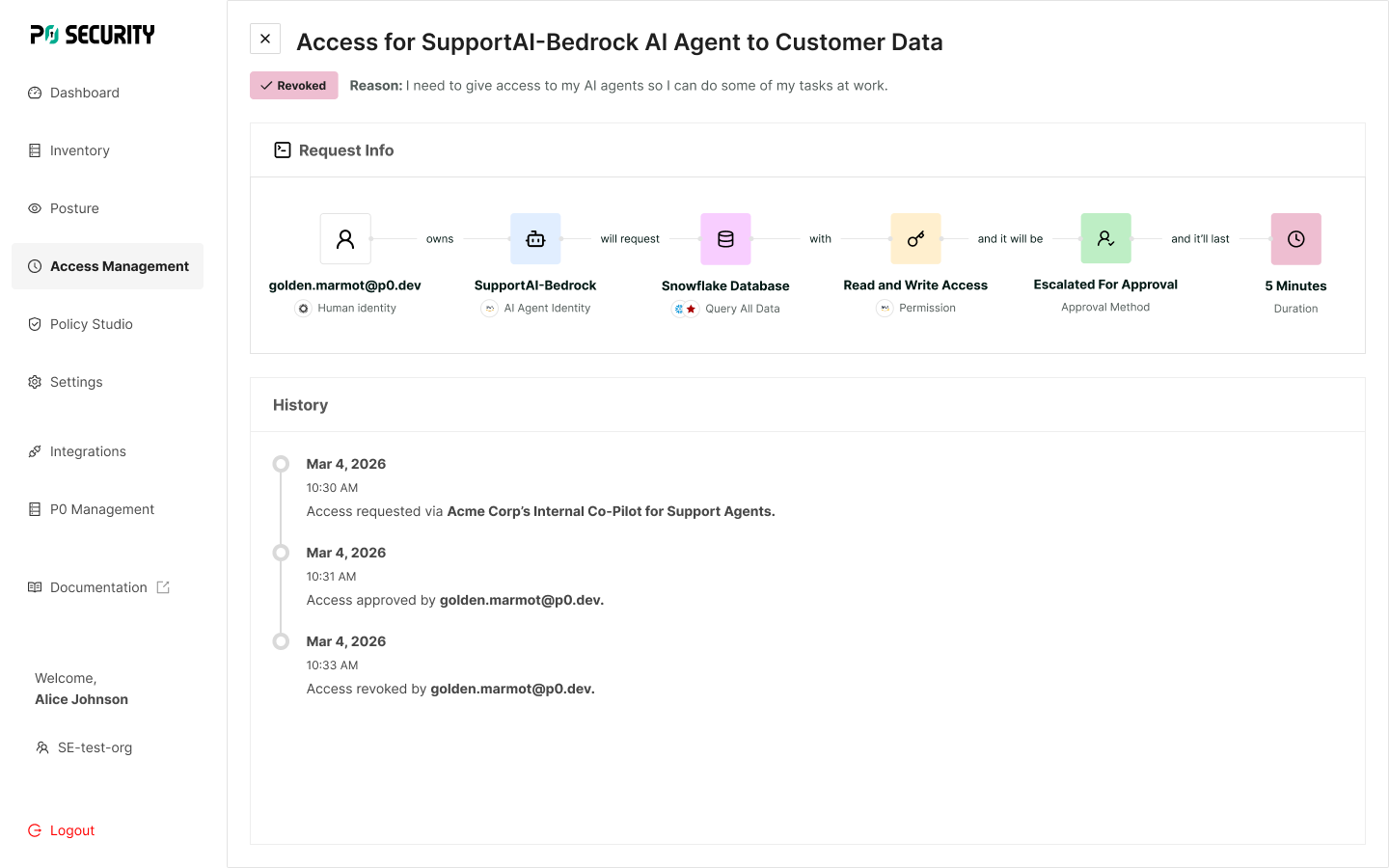
Regardless of how the task begins, P0 creates a blended identity that preserves the originator, acting agent and delegated context together, so downstream actions can be evaluated against the original task and authorized scope.
Learn more about blended identity →

Human-to-agent
A user invokes an agent or copilot to perform a task on their behalf.

Agent-to-agent
An upstream agent delegates part of a task to another agent.
Machine-to-agent
A workload, application, service, scheduler or event activates an agent without human involvement.
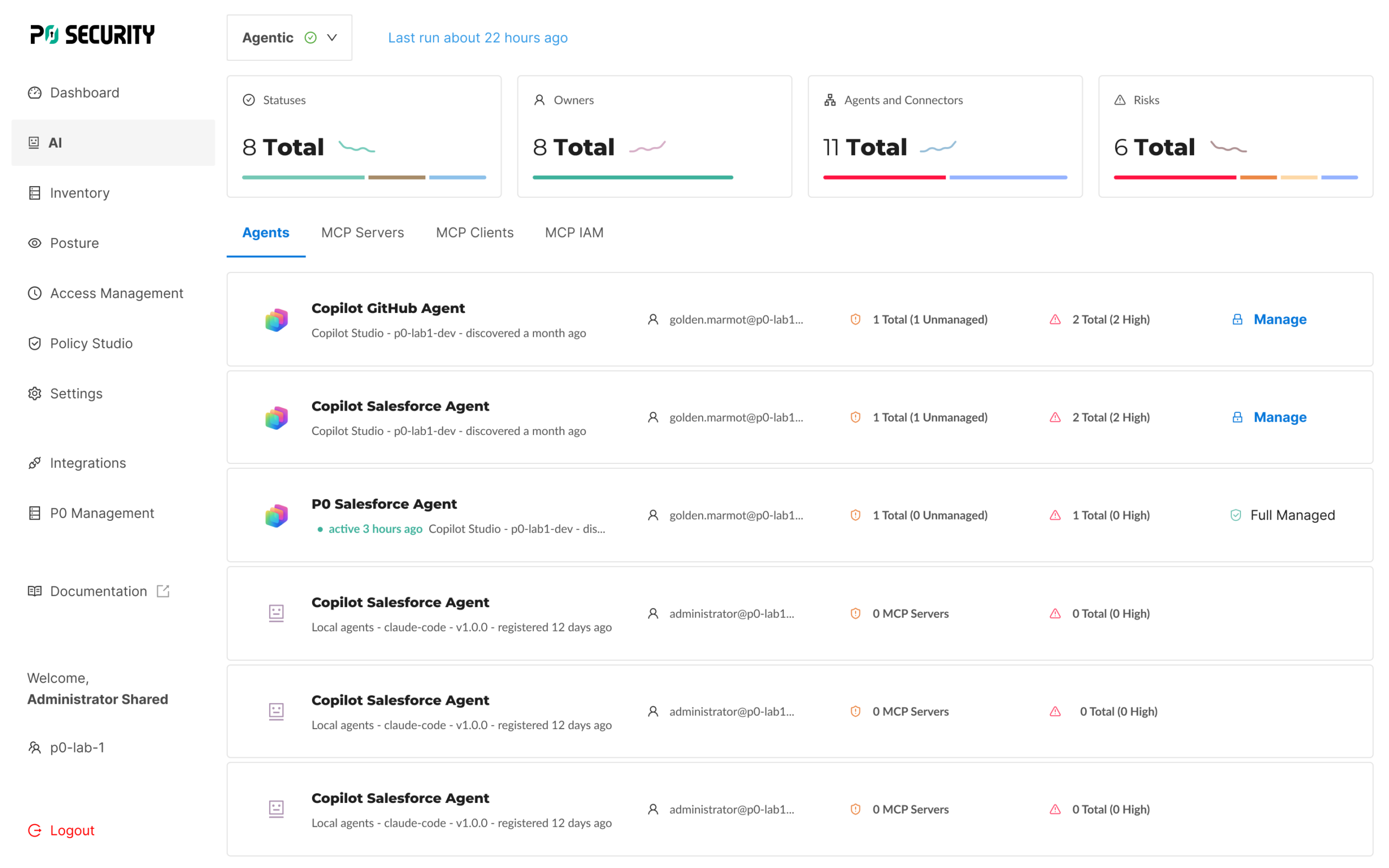
How a governed request moves through P0
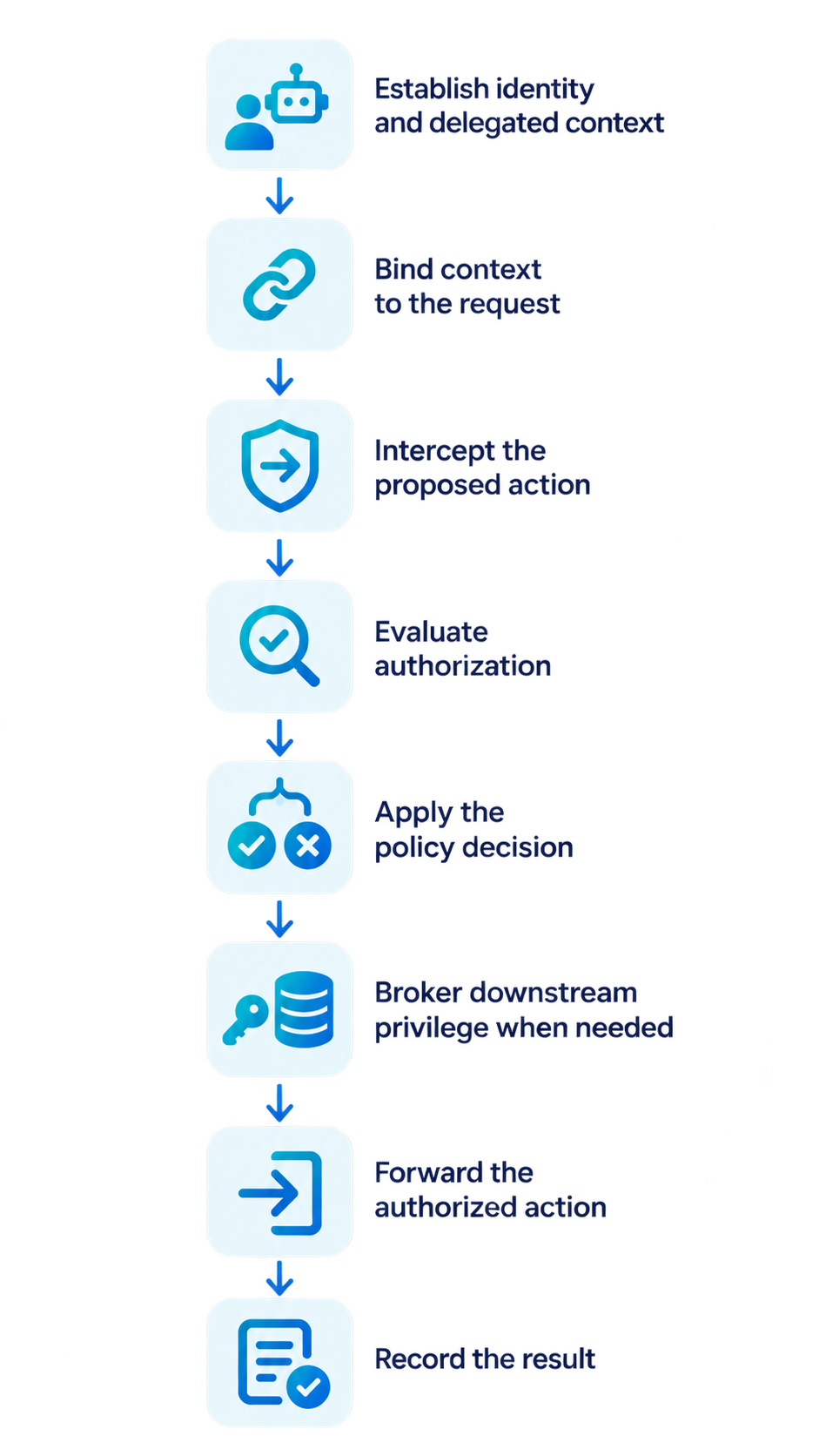
Establish identity and delegated context
The Auth Server federates with the enterprise IdP and establishes the originator, acting agent and delegated scope behind the task.
Bind context to the request
Signed identity context carries the originator and agent relationship with the request as it moves through the runtime path.
Intercept the proposed action
The Proxy Server receives the governed tool call before it reaches the downstream MCP server, API or workflow.
Evaluate authorization
P0 evaluates the request using identity, delegated context, task, tool, target and current conditions.
Apply the policy decision
The action can be allowed, denied, limited or escalated for approval based on what is authorized at that moment.
Broker downstream privilege when needed
When an approved action requires access inside a downstream cloud or application, the Auth Server can broker short-lived credentials scoped to the task.
Forward the authorized action
Only the permitted action proceeds to the downstream tool or target system.
Record the result
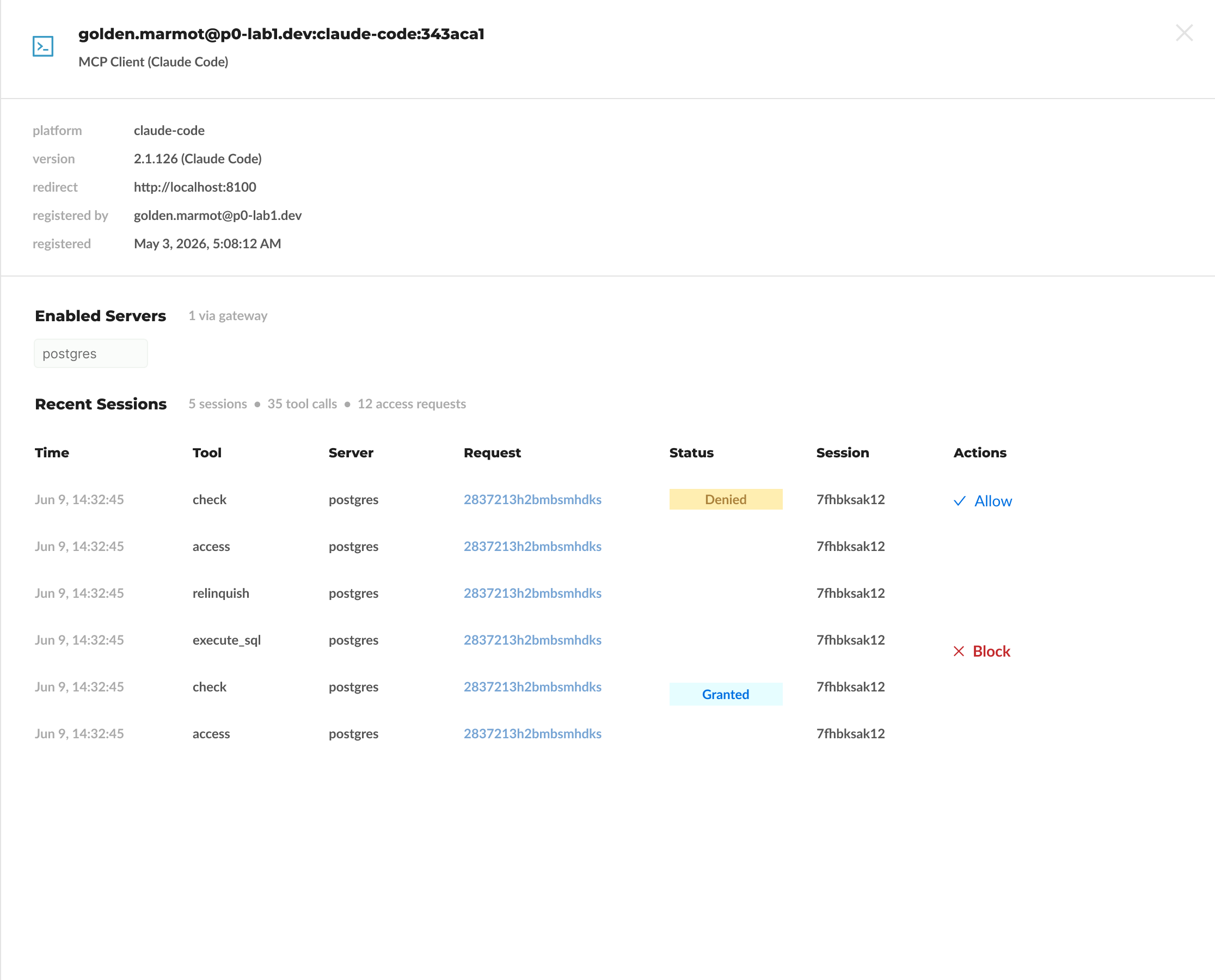
P0 captures the identity, policy, approval, action, target and outcome for logging, audit and investigation.
One architecture across every originating task

End-to-end authorization
Runtime authorization does not end when a tool call passes through the gateway.
P0 can enforce access at two different points in the action chain.

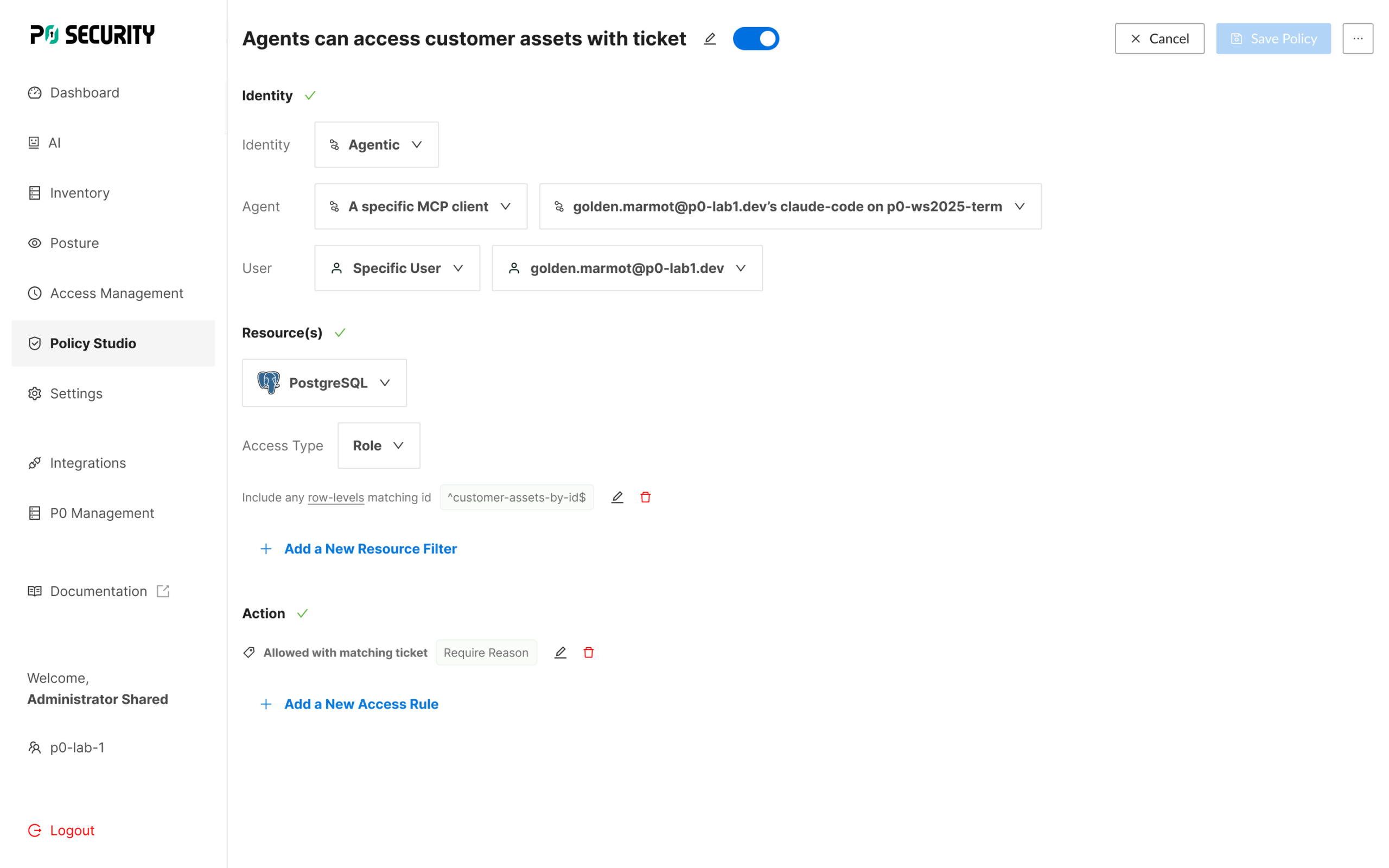
Action-level enforcement
Control whether the proposed tool call or operation is allowed to proceed.
The Proxy Server evaluates the request against policy using the identity, delegated context, task, target and current conditions surrounding the action.
Target-system enforcement
Control the actual privilege available inside supported downstream systems.
When access is required, P0 can provision or broker scoped, short-lived privilege for the task, then revoke that access when the approval window or task ends.
“Claude Code is reshaping our access risk model. Engineers could use agents to automate scripts on remote servers or access sensitive data on production databases.
One unintended command, rm–rf or mkfs, executed with an engineer's authority, can have catastrophic consequences. Every agent action needs to be evaluated against policy at runtime, not after the fact.”
Venkat Venkatraju
Cloud Security Engineer at Splunk
“Every agent action needs to be evaluated against policy at runtime, not after the fact.”