

Welcome, Identity at the Center listeners!
Control access at the moment an identity acts
P0 Security provides runtime access control for human agents.
Instead of relying on permanent roles, broad permissions or inherited access, P0 dynamically provisions the exact entitlement and identity needs for a specific task, resource and period of time.
Featured podcast
Why AI agents need more than authentication
In this Identity at the Center sponsor spotlight, host Jeff Steadman talks with P0 Security co-founder and CTO Greg Danyi about how organizations can control access as AI agents begin taking action across business systems.
Their conversation explores why authentication alone is not enough, how agents inherit dangerous permissions and why authorization has to happen when an action is being taken.
They also discuss:
- Why an AI agent should have its own identity
- How to prevent agents from inheriting a user’s full access\
- How intent, context and business evidence can shape authorization
- Why normal mistakes may create as much risk as malicious attacks
- How dynamic permissions limit an agent’s potential blast radius
- Why now is the best time to establish Zero Standing Privilege for agents
- How organizations can start small without slowing AI adoption
The access model is changing
Traditional access controls were built around relatively predictable users, applications and workflows.
AI agents break that model.
An agent may act on behalf of a person, respond to a ticket, call an MCP server, query a database and take action across several systems during a single session. Its identity alone does not tell you whether an action should be allowed.
You also also be able to quickly understand:
- Who or what initiated the action
- What task the agent is performing
- Which systems and data it needs
- What evidence supports the request
- How long the access should last
- Whether the action is appropriate right now
P0 evaluates that context and provisions only the permissions required for the task.
Authentication identifies the actor. Authorization controls the action.
Most organizations have invested heavily in authentication. They can verify the identity of a user, workload or agent. But once that identity is authenticated, it often receives broad permissions through a role, group, token or service account.
That leaves the harder question unanswered: What should this identity be allowed to do in this specific situation?
P0 brings authorization into the runtime flow so access can change based on the task, session, resource and business context.
Give every agent its own identity
Many agents currently operate using one of two models:
- They inherit a human user’s permissions
- They reuse a broadly privileged service account
Both models make it difficult to limit access, understand responsibility and produce a clear audit trail.
P0 treats the agent as its own identity while preserving the context of the person, workload or event that triggered it.
That creates a complete action chain:

Originator

Agent

Tool

Resource

Action
Security teams can determine what happened, what authorized it and which identity was responsible at every step.
Start agents with Zero Standing Privilege
Most enterprises are still early in agent adoption.
That creates a rare opportunity.
Instead of giving agents broad access and trying to remove it later, organizations can start with no standing privileges and dynamically provision only what each agentic session needs.
With P0, an agent can receive:
- A dedicated identity
- Task-specific permissions
- Resource-level restrictions
- Time-bound access
- Session-level auditability
- Immediate revocation when the task ends
The agent remains useful without being permanently trusted.

Control the blast radius, even when the agent gets it wrong
Not every risky agent action begins with an attacker.
An agent may misunderstand an instruction, respond to context drift, act on inaccurate information or follow a poorly written prompt exactly as written.
A simple mistake can become a serious incident when the agent has broad access.
P0 limits what the agent can reach before it acts. Even if the instruction is wrong or the agent behaves unexpectedly, its permissions remain constrained to the approved scope.
Use evidence instead of adding approval friction
Human approval is one form of authorization evidence. It is not the only one.
P0 can use existing business signals to determine whether access should be granted, including:
- On-call status
- Ticket ownership
- Project assignment
- Group membership
- Customer responsibility
- Change records
- Resource attributes
- Time, location and session context
This allows organizations to automate routine decisions while reserving human approval for higher-risk actions.
How P0 works
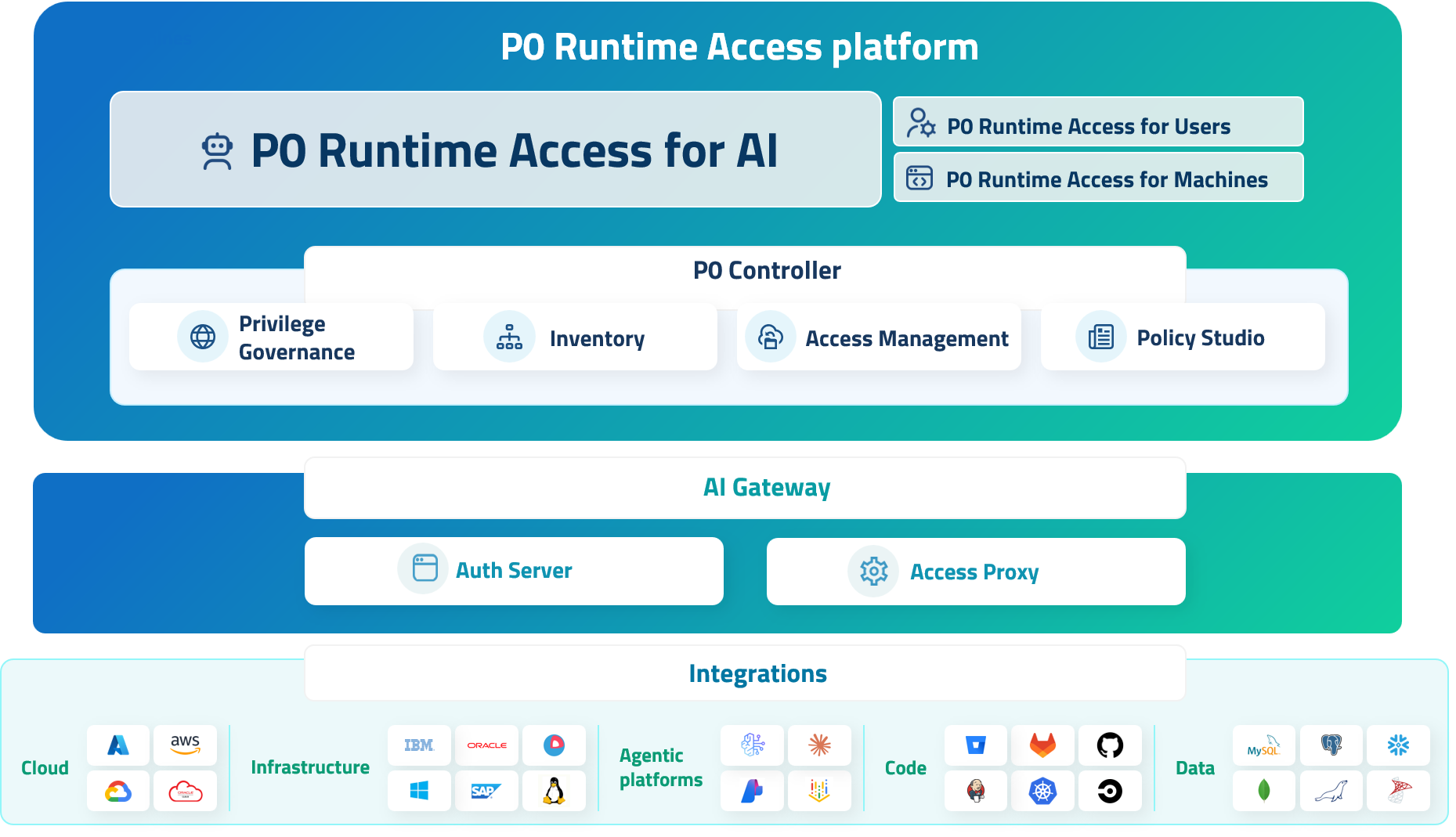
Discover
Understand the identities, permissions and access paths that exist across your environment, including users, service accounts, workloads and AI agents.
Control
Dynamically provision scoped access using native permissions in cloud platforms, databases, SaaS applications, developer tools and infrastructure.
Prove
Maintain an audit-ready record of every request, approval, policy decision, entitlement change and action.
Runtime access control for every identity
AI agents
Create dedicated agent identities and enforce permissions based on the originator, task, session and resource.
Humans
Give employees and contractors Just-in-time access without permanent roles, shared credentials or lengthy ticketing processes.

Non-human identities
Reduce the risk created by service accounts, API keys, workloads and long-lived credentials.
Built for modern environments
P0 works through native APIs and existing authorization systems rather than adding another access path.
- No bastions or jump hosts
- No credential vault required
- No permanent privileged roles
- No new proxy infrastructure
- No need to rebuild native permissions in a separate system
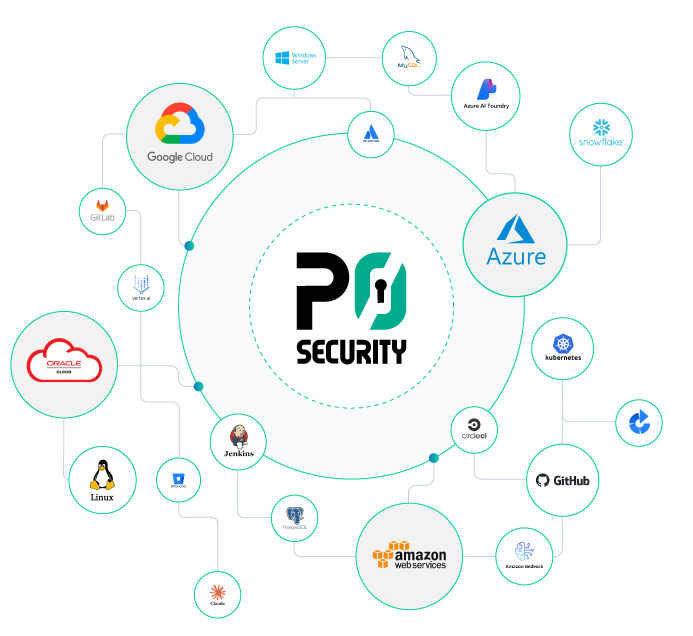
Teams can use the controls already available in AWS, GCP, Azure, Kubernetes, databases, GitHub and other systems while managing policy centrally through P0.
Start small. Establish the model. Expand from there.
Greg’s advice in the episode is simple: do not wait for the perfect enterprise-wide agent strategy. Choose one agent, one team or one workflow. Give the agent its own identity. Start with no standing privilege. Define what it should be able to do and learn from the first implementation. That is easier than trying to regain control after agents have already inherited broad access across the business.
Resources
Connect with Shashwat: https://www.linkedin.com/in/shashwatsehgal/
Connect with us on LinkedIn: https://www.linkedin.com/company/p0-security/
Jim McDonald: https://www.linkedin.com/in/jimmcdonaldpmp/
Jeff Steadman: https://www.linkedin.com/in/jeffsteadman/
Visit the show on the web at idacpodcast.com